What "Readiness" Means (And Why Most Apps Get It Wrong)
Written and reviewed by Scott Mongold, PhD — Co-Founder & CSO (Biomechanics & Neurophysiology, ULB).
Health 5 min readKey takeaways
- Readiness in sport science is a session-specific probability of adapting positively.
- Useful readiness models several inputs, not 1-2.
- Low readiness almost never means "rest." It usually means "reshape."
The science
The original sport-science definition of readiness
In the sport-science literature, readiness is defined as the probability that an athlete will respond positively to a specific training stimulus on a specific day. The keyword is "specific": readiness is session-relative, not absolute. A body that is unready for high-intensity intervals can be perfectly ready for a long aerobic ride. A nervous system that is not ready for max-effort lifting can still produce a good technical session at 70% of a one-rep max.
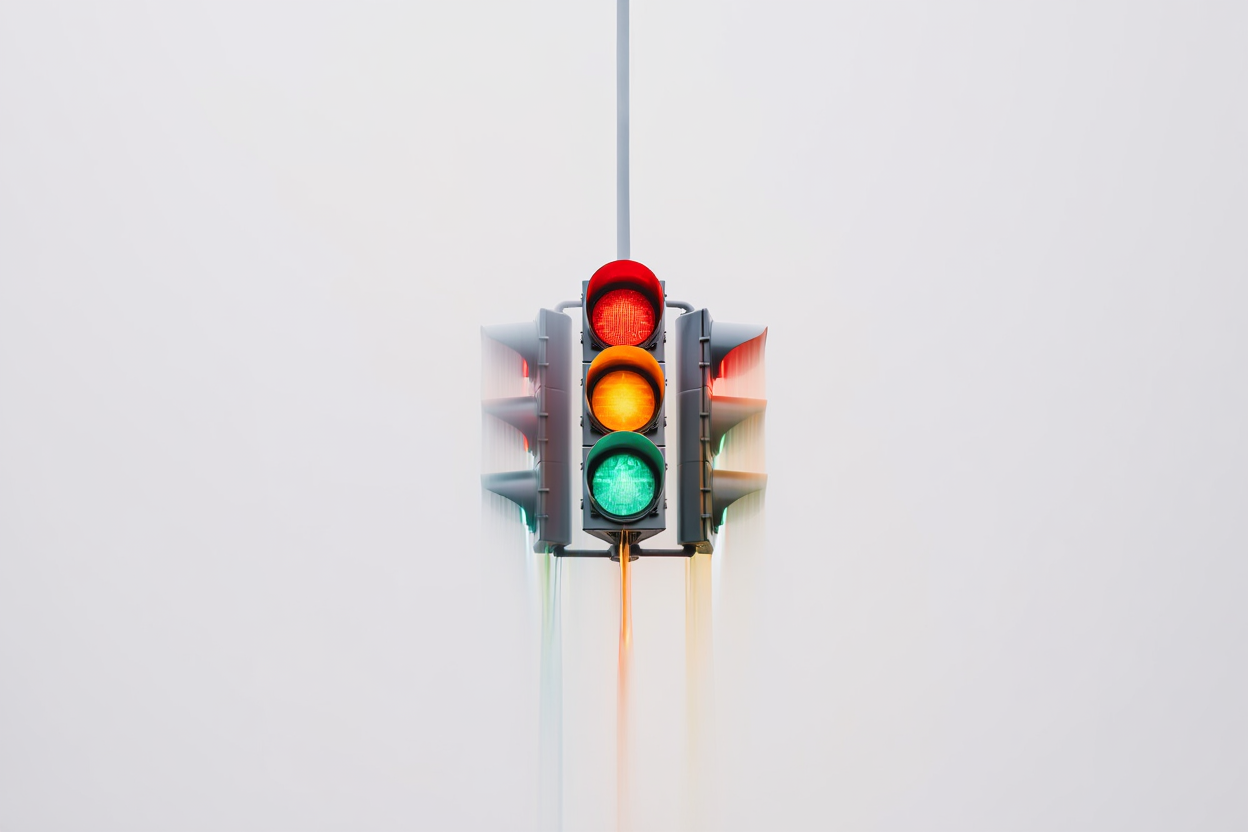
The popular "readiness score" emerged not from sport science but from the consumer wellness category, where the goal was to convert biometric data into a single number a non-athlete could glance at. That goal was reasonable; the side effect: it collapses a multi-dimensional construct into a traffic light.
Real readiness, then, is closer to a forecast than to a verdict. It estimates the likelihood that a particular kind of training stress, performed today, will produce adaptation rather than maladaptation. That estimate depends on what the session is, what the body has been doing, and what condition the relevant systems are in.
Why a single HRV reading is a terrible proxy
The most common readiness score in 2026 is a function of overnight HRV plus a couple of related variables, output as a green/yellow/red band. The implementation works because HRV is genuinely a decent autonomic-nervous-system signal, but it works less well than the marketing implies, because a single morning reading is noisy and one-dimensional.
Single-day HRV is influenced by sleep duration and stage distribution, hydration, alcohol, caffeine, last night's meal timing, body temperature, sleeping position, and measurement technique. Any of these can move HRV by a margin large enough to change a "yellow" reading into "red," and none of them are about training capacity. Athletes who learn to take a single morning HRV value as the day's verdict are training based on a measurement so noisy it is essentially random on any given day.
A 7-day rolling baseline cleans up some noise. The deviation of today's reading from that baseline, combined with the trajectory across multiple days, is much more informative. But even that, using HRV correctly, is one input. Calling it readiness is an oversimplification. HRV is part of the readiness picture; it is not the picture.
How sleep-stage data changes the readiness equation
Sleep is a particularly under-appreciated readiness input because most apps reduce it to total time asleep or a sleep score. The literature is clear that the stages matter: slow-wave sleep is when the largest pulses of growth hormone occur and when much of physical recovery is consolidated, while REM sleep is heavily implicated in motor learning, cognitive consolidation, and CNS recovery. Six hours of sleep with intact slow-wave is not the same as eight hours of fragmented sleep with truncated REM, and the resulting readiness profile differs in predictable ways.
Practically, this means an athlete who slept seven hours but with poor architecture can produce a "passing" readiness score on a single-input model and still be unprepared for high-intensity work. Conversely, a short but architecturally clean night may support a hard session better than the score suggests. This is the gap a platform built on neuroscience-grade sleep modeling, multi-stage, fragmentation-aware, is built to close.
Why low readiness should reshape the session, not cancel it
A common mistake when readiness comes back low is to cancel the workout. That is almost always the wrong response. Total rest is rarely the optimal answer to a low-readiness day; the right answer is usually to reshape the session: keep the workout, but change its character. The reason is that low readiness typically reflects a specific kind of stress, not a global incapacity, and there is almost always a productive session that the body can handle.
Concretely, a low readiness score in the context of a planned hard interval session might become a long aerobic ride at the same total duration. A planned heavy strength session might become a technique session at 60% loads with the same exercise selection. The training stimulus changes; the training day does not disappear. Across a block, the cumulative effect of reshaping rather than canceling is often larger than the cumulative effect of a perfectly executed hard schedule, because the reshape captures sessions that would otherwise be lost to fear of the score.
This is also why the green/yellow/red model fails athletes. It pushes a binary decision (train hard / do not train) onto a problem that is actually four-dimensional (intensity, volume, modality, duration). Adaptive platforms that prescribe a different session, not just suggest you back off, are doing the work the score should be doing.
The neuroscience of session-specific readiness (CNS vs. peripheral fatigue)
Readiness becomes session-specific because fatigue is not one thing. Neuroscience distinguishes central fatigue, reductions in central nervous system drive, neuromuscular activation, and cognitive function, from peripheral fatigue, the metabolic and contractile fatigue inside the muscle itself. They recover on different timelines and respond to different stimuli.
CNS fatigue is the limiting factor for max-effort work: sprints, top-end intervals, heavy strength. It clears more slowly than peripheral fatigue and is driven heavily by total nervous-system stress, not just training load. Peripheral fatigue is the limiting factor for sustained submaximal work: long aerobic efforts, threshold riding, and recovers more quickly with adequate fueling and sleep. The same athlete on the same day can have residual CNS fatigue but recovered peripheral systems, which makes max-effort work a poor choice and aerobic work a perfectly reasonable one.
A real readiness model encodes this distinction. That is why neuroscience-led platforms output session-specific recommendations rather than a single daily verdict. The same morning data can support an easy long ride and forbid a sprint workout, and that is not a contradiction; it is the point.
What to ignore on low-readiness days (and what is actually meaningful)
On a low-readiness day, the things to ignore are the comparison to yesterday's reading, the absolute number, and the green/yellow/red color band. None of those are good guides for action. The things that are actually meaningful are the rolling trend (is this part of a multi-day pattern, or a single noisy day?), sleep architecture (was the night architecturally clean or fragmented?), the magnitude of recent load (does the body have a reason to be tired?), and subjective state (does the score match how you actually feel?).
A useful default rule: when three of those four inputs disagree with the readiness score, trust them, not the score. A "low readiness" output produced from a single noisy HRV reading on a clean-sleep, normal-load, normal-feeling morning tends to be wrong. A "high readiness" output the morning after a 90-minute threshold ride and four hours of fragmented sleep is also almost always wrong.
The best practical translation of all of this: stop using readiness as a verdict and start using it as an input to a question "What should I train today?" The right readiness model gives you a different answer for an aerobic session than for an interval session, on the same morning, with the same data.
Frequently asked questions
What does a readiness score actually mean in training apps?
In most consumer apps, a readiness score is a function of overnight HRV plus a small number of related variables (resting heart rate, sleep duration), output as a single number or color band. The consumer score is a rough proxy for autonomic state.
How can I tell if my app's readiness score is any good?
Two practical tests. First, does it differ for different kinds of sessions? A single-number model is by definition not session-specific and will frequently disagree with how the body actually performs across modalities. Second, does its output change what the app prescribes? Different intervals, different durations, different intensity targets. A score that does not change behavior is decoration.
Why are readiness scores from different apps different?
Because they measure different things. Apps using only HRV and resting heart rate produce a narrow autonomic-state proxy. Apps integrating sleep stages produce a recovery-quality estimate. Apps integrating training load produce a stress-balance estimate. Apps integrating all of the above plus subjective state produce something close to actual readiness.