From Gym Rat to Lab Rat: A Personal Introduction
Written and reviewed by Scott Mongold, PhD — Co-Founder & CSO (Biomechanics & Neurophysiology, ULB).
Sports 7 min readKey takeaways
- umo Health focuses on making neuroscience-based assessment more accessible for everyday athletes, moving beyond traditional heart-focused metrics.
- The platform integrates brain and muscle physiology to examine how the nervous system controls movement and responds to exercise and age.
- Traditional neuroscientific research requires expensive equipment like MRI and EEG, prompting development of alternative means to assess neural activity.
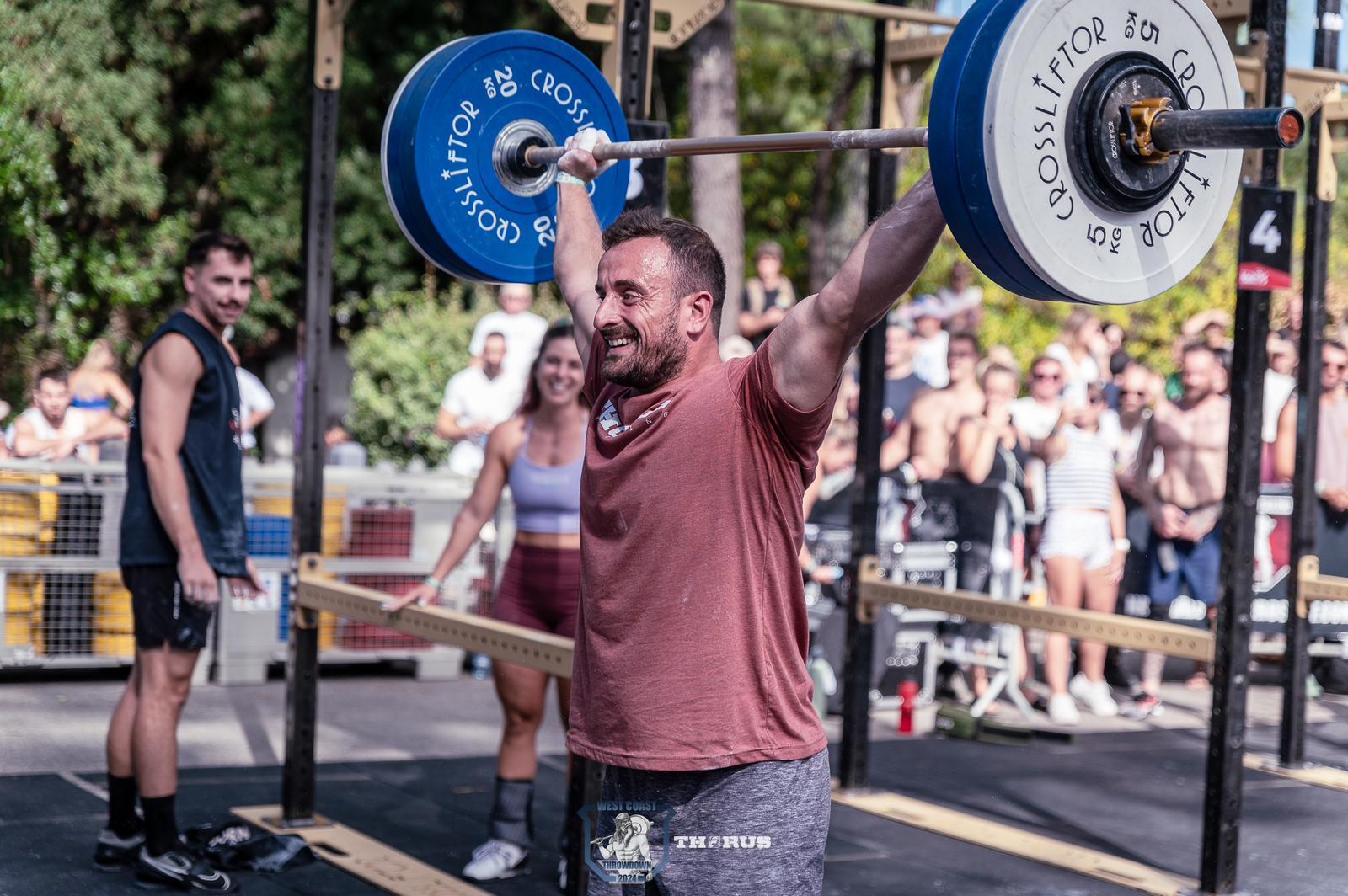
Now, this is my first blog and before I get into (hopefully) incredible scientific detail about neuromuscular health, health tracking, and performance science, I wanted to introduce myself, just so you know who you’re dealing with. Already, maybe you noticed that this blog is written in the 1st person. I want my blogs to be a window into my head and I figured this was the best way to do this - more of a stream of consciousness kind of feel. Of course, this, in itself, is an experiment, but I will try nonetheless. If you have any feedback, good or bad, don’t hesitate to set-up a call 😉
Who am I?
A little about me: my name is Scott, and I am the co-founder and Chief Scientific Officer here at umo health. How did I get here? Oooof, it’s a long story, with tons of turns and several stops along the way. For starters, I grew up in the gym (this is where my parents met), so this whole performance thing is in my blood. You can ask anyone who knows me and they will most certainly confirm this. I have truly been obsessed with how the brain controls movement since I can remember. With this in mind, I pursued my Bachelor’s degree in Biopsychology from Tufts University, where I spent my “free” time working on several research projects all related somehow to the brain and movement science. During this time, I fell in love with research. I would even say my curiosity defines me. I have never really grown out of the “why?” phase.
From there, I moved across the country to the University of Oregon, where I studied muscle physiology and received my Master’s degree, advised by the brilliant scientist, mentor, and professor, Damien Callahan, PhD. I was fortunate to get an up-close understanding of both cellular and whole-tissue muscle physiology. To explain it as simply as possible, our studies were geared towards determining how exercise and age influenced tiny, tiny modifications to (mostly) structural proteins that control muscle contraction. We also investigated the effects of resistance training on muscle size, composition, stiffness, and function. For the gym rat in me, this was some pretty cool work to get my career started…yet, I was missing something. We were exploring the hardware of the body (the musculoskeletal system), but not the software (the nervous system).
After I finished up at Oregon, I decided that more school couldn’t hurt. The brain seemed a little too important not to dedicate at least a few years of study to.
Heading overseas
I moved continents. I moved to Belgium, where I received my PhD in Neuromechanics from the Université libre de Bruxelles (ULB). Here, I was advised by another phenomenal scientist (and even better person), Mathieu Bourguigon, PhD. In my previous work, I was always surrounded by physiologists and clinicians, mostly people studying the biology and functionality of the body. At ULB, however, this was a different story. My mentors were physicists and biomechanists, opening up an entirely new world to me. Thanks to their help, we were able to tackle research questions that integrated brain and muscle physiology and examined how these interact to generate movement. Basically, our line of research is all about how the nervous system controls movement and how this is shaped by age, disease, exercise, etc.
Bringing neuroscience out of the lab
One of the key features of my work (and what I want to spend my career doing) is to create more accessible ways to assess the nervous system. Regrettably, neuroscientific research is incredibly expensive, time intensive, and often requires highly specialized personnel for data analysis - think MRIs, MEG (magnetoencephalography), and EEG (electroencephalography) for starters. For these reasons, scientists all over the world have tried to identify other means of assessing neural activity. You’re probably asking yourself, “How could this possibly work?” This blog is just an introduction, so unfortunately, I am going to have to leave you on the edge of your seat. Keep an eye out for the next blog to get an answer 👀
So, to re-cap: I am a trained neuroscientist/biomechanist (and coach, maybe I’ll talk about that in future blogs), who loves to explore how our nervous system controls movement. More importantly, I want to find ways to leverage neuromuscular data in ways that benefit humanity.
This brings me to where I am now. umo health is a start-up I’ve co-founded with Andrea Quattrocchi to do exactly this. I challenge you to think about the current state of health/performance tracking. What comes to mind? What’s missing? Most everyone is looking at the heart, but what about the brain?
Join Our Beta Program.
Frequently asked questions
What is neuromechanics?
Neuromechanics examines how the nervous system controls movement and how this is shaped by age, disease, and exercise, integrating brain and muscle physiology.
Why focus on the brain instead of the heart for performance tracking?
Most health tracking focuses on the heart, but the nervous system (the body's 'software') controls movement and may offer insights missing from heart-based metrics alone.
What makes traditional neuroscience research difficult to access?
Neuroscientific research is expensive, time-intensive, and requires specialized equipment (MRI, MEG, EEG) and personnel for data analysis.
What is umo's approach to neuromuscular assessment?
umo aims to create more accessible ways to assess the nervous system, leveraging neuromuscular data to benefit everyday athletes and broader populations.
What background informs umo's scientific approach?
The platform draws on research integrating muscle physiology (hardware) and nervous system function (software), examining how exercise and age influence both.
Put this into practice
umo combines your wearable data with a quick neuromuscular check to build the session that fits your body today.