Health Tracking: Current State Of Affairs
Written and reviewed by Scott Mongold, PhD — Co-Founder & CSO (Biomechanics & Neurophysiology, ULB).
Technology 5 min readKey takeaways
- Cardiovascular diseases account for 32% of global deaths, explaining why most wearables focus heavily on heart-related metrics like heart rate and blood pressure.
- Current health tracking captures cardiovascular, activity, and sleep data well, but largely ignores neuromuscular system health—how the brain and muscles coordinate movement, strength, and resilience.
- Neuromuscular and biomechanical assessments, traditionally reserved for research or clinical settings due to cost, can now be performed using smartphone sensors for comprehensive health tracking.
Our Obsession with Health and Longevity
It seems like conversations about health, longevity, smart watches, or even protein are happening everywhere around me. Now…maybe that’s just me, maybe it’s a product of excellent social media algorithms that bombard me with content I’m likely to interact with, or maybe it’s because I’m obsessed with health and the science of health, so regardless of where I am or who I speak to, these sorts of topics always come up. Or maybe, the real answer is that, collectively, we are becoming hyperaware of our future health and it’s on the forefront of the minds of an incredible number of people.
Maintaining one’s health throughout their lifetime ensures you get to do what you want, when you want. However, I’d like to point out that health, at least in the context of longevity, is often linked implicitly to cardiovascular function (heart function). Take a visit to the homepage of the National Institutes of Health (https://www.nih.gov/) and you’ll see a graphic with the following text, “Know Your Blood Pressure Numbers” (this is the graphic displayed on Oct. 28th, 2025; undoubtedly this will change, but you get the idea). The link between heart health and general health is incredibly clear. According to the July 2025 report from the World Health Organization, cardiovascular diseases account for an estimated 32% of all global deaths (WHO July 2025 Report). This is a massive statistic and drives home the importance of heart health.
Today’s Wearables
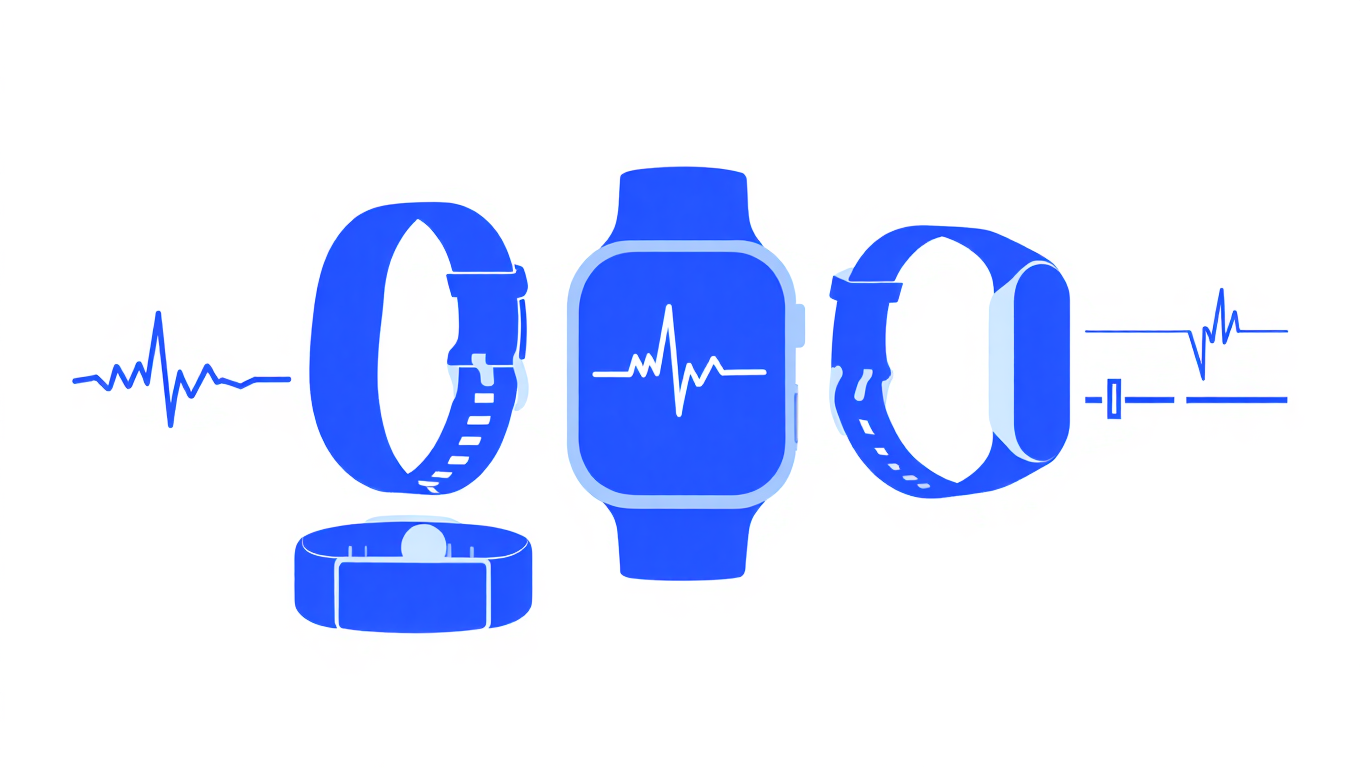
The current state of health tracking is heavily biased towards cardiovascular-related metrics. When I say bias, I mean that the major players of the health tracking economy disproportionately focus on technologies related to estimating heart function. It’s not hard to see why this is the case; the statistics speak for themselves. Most of us have the intuitive awareness of the importance of heart health because during our doctors visits, our hearts are listened to and our blood pressure is monitored.
Now, imagine you’re a wearable company, it’s easy to see why you’d cling to the familiar territory of cardiovascular-related assessments.
Of course, the wearables of today track more than heart rate. Physical activity and sleep metrics also dominate your dashboards. You’ve probably heard that you should reach at least 10,000 steps per day and sleep ~8 hours. Nothing too novel, but there really is proof that movement is medicine (check out this pretty convincing work: step count research) and that adequate sleep keeps you healthy (basic sleep recommendations).
Tomorrow’s Solution
So what’s missing? Is health tracking fully comprehensive? No, of course not. I should also be clear: the common metrics across our devices provide incredible data about health and wellness, but some pretty huge gaps are also quite evident.
We track cardiovascular measures, but what about the nervous system, what about our biomechanics? Good health doesn’t singularly mean that our hearts are working properly. Good health necessitates that our brains and muscles are finely tuned, responsive, and capable of working together to support strength, coordination, and resilience.
For me, this is intuitive (but that comes from a career in the field), yet we don’t have great ways of quantitatively tracking this ‘neuromuscular’ system, at least as an average person. Think about the possibilities! What if your data could tell you when your nervous system is primed for performance, or when stress and fatigue are quietly eroding your movement control?
In my experience, such measures are often reserved for research or clinical purposes. This is often due to the cost of available technologies - think along the lines of expensive brain imaging or specialized sensors. This is where things need to change. We need to find ways to make measures of our nervous system accessible because, only then, can we truly understand the full picture of human health, not just how our heart beats, but how our nervous system drives it all.
It turns out that we can estimate some important characteristics of our nervous system with some pretttttty straightforward tests and sensors (available in your smartphone). We can also assess biomechanics without crazy high-tech camera systems; translation: we can use our phones to track both neural and biomechanical metrics.
Don’t believe me? Tune in next week and I’ll discuss how umo is leveraging sensors to power movement intelligence.
Frequently asked questions
What health metrics are missing from today's wearables?
Neuromuscular system measures—how the brain and muscles work together for strength, coordination, and movement control—are largely absent from consumer health tracking.
What does neuromuscular health refer to?
Neuromuscular health describes how well the nervous system and muscles coordinate to support strength, movement control, coordination, and resilience under stress or fatigue.
Can smartphones measure neuromuscular or biomechanical health?
Yes, the article suggests straightforward tests using smartphone sensors can estimate important nervous system characteristics and assess biomechanics without expensive lab equipment.
How many steps per day are recommended for health?
At least 10,000 steps per day is commonly recommended, with research supporting that movement has measurable health benefits.
Why do most health wearables focus on heart-related metrics?
Cardiovascular diseases cause 32% of global deaths, making heart health a critical and familiar area for both doctors and wearable companies to monitor.
Put this into practice
umo combines your wearable data with a quick neuromuscular check to build the session that fits your body today.