Gut-Brain Axis in Exercise: How Your Microbiome Influences Performance and Recovery
Written and reviewed by Scott Mongold, PhD — Co-Founder & CSO (Biomechanics & Neurophysiology, ULB).
Health 5 min readKey takeaways
- Exercise causally increases microbial diversity and butyrate-producing bacteria, but these benefits reverse when training stops, requiring consistent physical activity.
- Veillonella atypica metabolizes lactate into propionate during exercise, recycling a waste product into usable fuel and improving endurance performance in animal models.
- Endurance athletes experience GI distress primarily from splanchnic hypoperfusion reducing gut blood flow by up to 80%, not from diet alone.
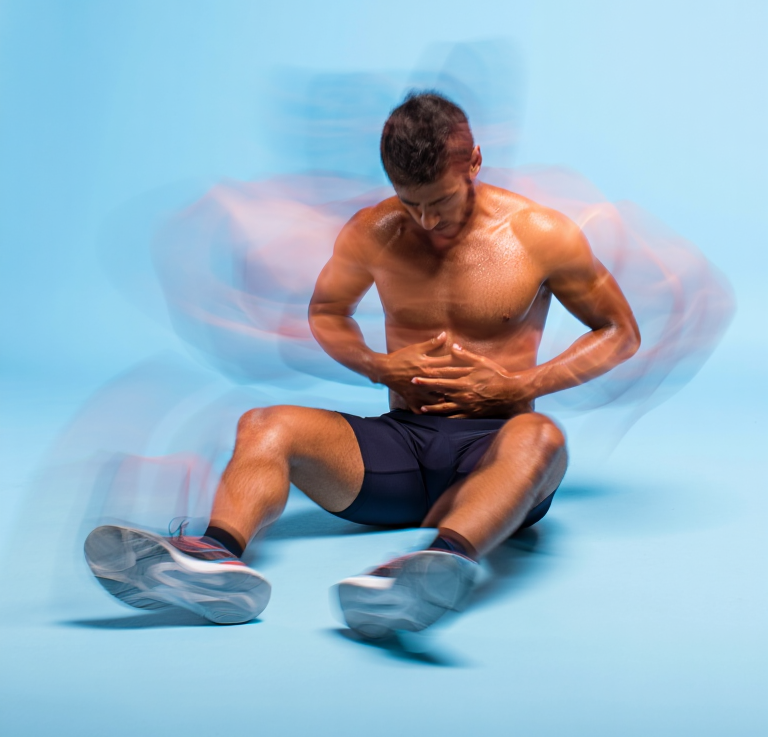
You may have heard that your gut is your "second brain." Like most popular science catchphrases, this one oversimplifies a genuinely fascinating area of research. Your gastrointestinal tract houses roughly 38 trillion microorganisms, communicates bidirectionally with your central nervous system through the vagus nerve and immune signaling pathways, and produces more serotonin than your brain does. For active people, the relationship between gut health and performance is far more direct than most realize.
This post covers what the research shows about the gut-exercise connection: how exercise shapes your microbiome, how your microbiome influences performance and recovery, why endurance athletes get GI distress (and what to do about it), and what the evidence supports in terms of nutrition and supplementation, without falling for probiotic marketing hype.
Your microbiome: a brief orientation
Your gut microbiome is the collective community of bacteria, archaea, fungi, and viruses that colonize your gastrointestinal tract. The majority reside in your large intestine. These organisms are not passive passengers, they perform essential metabolic functions that your own cells cannot, including fermenting dietary fiber into short-chain fatty acids (SCFAs), synthesizing certain vitamins (B12, K2, folate), metabolizing bile acids, and training your immune system to distinguish between pathogens and harmless substances.
Microbiome composition varies enormously between individuals, influenced by genetics, diet, geographic location, medication history (particularly antibiotics), and, as more recent research has demonstrated, physical activity.
How exercise shapes the gut
The relationship between exercise and the microbiome is bidirectional, but let's start with how exercise affects your gut.
Clarke et al. (2014) published a landmark study comparing the gut microbiomes of professional rugby players to sedentary controls matched for age and body size. The athletes had significantly greater microbial diversity, a marker consistently associated with better health outcomes, and higher proportions of bacteria associated with protein metabolism and SCFA production. Barton et al. (2018) followed up on this work and found that the athletes' microbiomes were enriched in metabolic pathways related to amino acid biosynthesis, carbohydrate metabolism, and cell motility. In other words, the athletes did not just have "more" bacteria, they had functionally different microbial communities that appeared better equipped to support high physical demands.
Allen et al. (2018) demonstrated that the exercise effect is causal, not just correlational. In a controlled study of previously sedentary adults, six weeks of moderate-intensity exercise (without dietary changes) increased concentrations of butyrate-producing bacteria and fecal butyrate levels. Butyrate is a short-chain fatty acid that serves as the primary fuel source for colonocytes (the cells lining your colon), strengthens the intestinal barrier, and has anti-inflammatory properties. When the participants stopped exercising, these changes reversed, suggesting that regular physical activity is needed to maintain the benefit.
How the microbiome influences performance
The most striking finding in recent years came from Scheiman et al. (2019). The researchers collected stool samples from Boston Marathon runners before and after the race and found a significant post-race increase in the abundance of Veillonella atypica, a bacterium that metabolizes lactate. They then isolated this strain and put it into mice, who subsequently showed an increase in treadmill run time compared to controls receiving a different bacterial strain.
The proposed mechanism is elegant: during intense exercise, lactate produced by working muscles enters the bloodstream and crosses into the gut lumen. Veillonella converts this lactate into propionate, a short-chain fatty acid that can then be used as an energy substrate. In essence, this bacterium helps recycle a metabolic waste product into usable fuel.
This does not mean you should rush out to buy a Veillonella supplement, it does not exist commercially, and we do not yet know how to reliably increase its abundance through diet or lifestyle. But it illustrates a broader principle: your microbiome is not separate from your metabolism during exercise. It is an active participant.
Beyond direct metabolic contributions, the gut microbiome modulates systemic inflammation through its influence on the intestinal barrier and immune system. Clark and Mach (2016) reviewed the evidence and concluded that a diverse, well-functioning microbiome supports exercise recovery by reducing systemic inflammation, supporting immune function (important during heavy training blocks), and optimizing nutrient absorption.
Why endurance athletes get GI distress
If you have ever experienced cramping, nausea, diarrhea, or the urgent need for a bathroom during or after a long run, you are in good company. Gastrointestinal distress affects an estimated 30-50% of endurance athletes during training and competition.
The primary cause is not diet. During intense or prolonged exercise, your body redirects blood flow away from the splanchnic (gut) circulation and toward working muscles, the heart, and the skin (for thermoregulation). This process, called splanchnic hypoperfusion, can reduce gut blood flow by as much as 80 percent during high-intensity effort. The resulting ischemia (insufficient blood flow) damages the tight junctions between intestinal epithelial cells, increasing gut permeability, sometimes called "leaky gut."
Costa et al. (2017) suggests that exercise-induced increases in gut permeability allow bacterial endotoxins (lipopolysaccharides, or LPS) to enter the bloodstream, triggering a systemic inflammatory response that contributes to gut symptoms, fatigue, and impaired performance. Heat exacerbates this effect significantly, which is why gut problems are more prevalent in hot-weather events.
Evidence-based strategies for supporting gut health as an active person
Dietary fiber diversity is the way. The bacteria in your gut feed primarily on dietary fiber and resistant starches that your own digestive enzymes cannot break down. Different bacterial species thrive on different types of fiber, which is why diversity of fiber sources, vegetables, fruits, legumes, whole grains, nuts, seeds, matters. McDonald et al. (2018) found that individuals who consumed more than 30 different plant types per week had significantly greater microbial diversity than those consuming 10 or fewer, regardless of whether they identified as vegetarian or omnivore.
Fermented foods provide transient beneficial bacteria. Yogurt, kefir, kimchi, sauerkraut, and other fermented foods introduce live bacteria that, while they may not permanently colonize your gut, produce beneficial metabolites during their transit and can stimulate immune activity. Wastyk et al. (2021) showed in a randomized trial that a high-fermented-food diet consistently increased microbial diversity and decreased markers of systemic inflammation, even more effectively than a high-fiber diet in the short term.
Be cautious with probiotics. The probiotic supplement market is enormous, but the evidence for most commercially available strains in healthy, active people is modest at best. Jager et al. (2019) published a position stand on probiotics acknowledging that certain strains (particularly Lactobacillus and Bifidobacterium species) may reduce the incidence and severity of upper respiratory tract infections in athletes during heavy training, a meaningful benefit given that immune suppression is a real concern during high-volume blocks. However, the review also noted that strain specificity matters: benefits demonstrated for one bacterial strain cannot be assumed to apply to a different strain, even within the same species.
Train your gut for race conditions. If you are an endurance athlete who consumes carbohydrates during competition (gels, drinks, bars), practicing your race nutrition during training can improve gut tolerance. Jeukendrup (2017) reviewed the evidence showing that the gut's ability to absorb carbohydrates during exercise is trainable, regular exposure to carbohydrate feeding during exercise increases the expression of intestinal glucose transporters (SGLT1 and GLUT5), improving absorption rates and reducing the likelihood of gut distress on race day.
Avoid unnecessary NSAID use around exercise. Ibuprofen and similar non-steroidal anti-inflammatory drugs are popular among athletes for managing pain, but van Wijck et al. (2012) showed that NSAID use during exercise significantly worsens exercise-induced gut permeability and intestinal damage. The combination of splanchnic hypoperfusion and NSAID-mediated inhibition of protective prostaglandins in the gut lining is particularly harmful.
Frequently asked questions
What is the gut-brain axis?
The gut-brain axis is bidirectional communication between your gastrointestinal tract and central nervous system through the vagus nerve, immune signaling, and microbial metabolites.
How does exercise change your gut microbiome?
Six weeks of moderate exercise increases butyrate-producing bacteria and microbial diversity without dietary changes, but benefits reverse when exercise stops.
Why do runners get stomach problems during races?
Intense exercise reduces gut blood flow by up to 80%, damaging intestinal tight junctions and increasing permeability, which allows bacterial endotoxins into the bloodstream.
Should athletes take probiotic supplements?
Some strains may reduce upper respiratory infections during heavy training, but benefits are strain-specific and evidence for performance improvement in healthy athletes is modest.
How can I improve gut tolerance for race-day nutrition?
Regular carbohydrate feeding during training increases intestinal glucose transporter expression, improving absorption rates and reducing gut distress during competition.
Put this into practice
umo combines your wearable data with a quick neuromuscular check to build the session that fits your body today.