Grip Strength and Longevity: Why This Simple Metric Predicts How Long You'll Live
Written and reviewed by Scott Mongold, PhD — Co-Founder & CSO (Biomechanics & Neurophysiology, ULB).
Health 5 min readKey takeaways
- Grip strength outperforms blood pressure and BMI as a predictor of cardiovascular mortality and all-cause death in large cohort studies.
- Each 5 kg reduction in grip strength is associated with a 17% higher risk of cardiovascular mortality and all-cause death.
- Grip strength is trainable at any age through heavy lifting, farmers carries, and dedicated grip work like dead hangs.
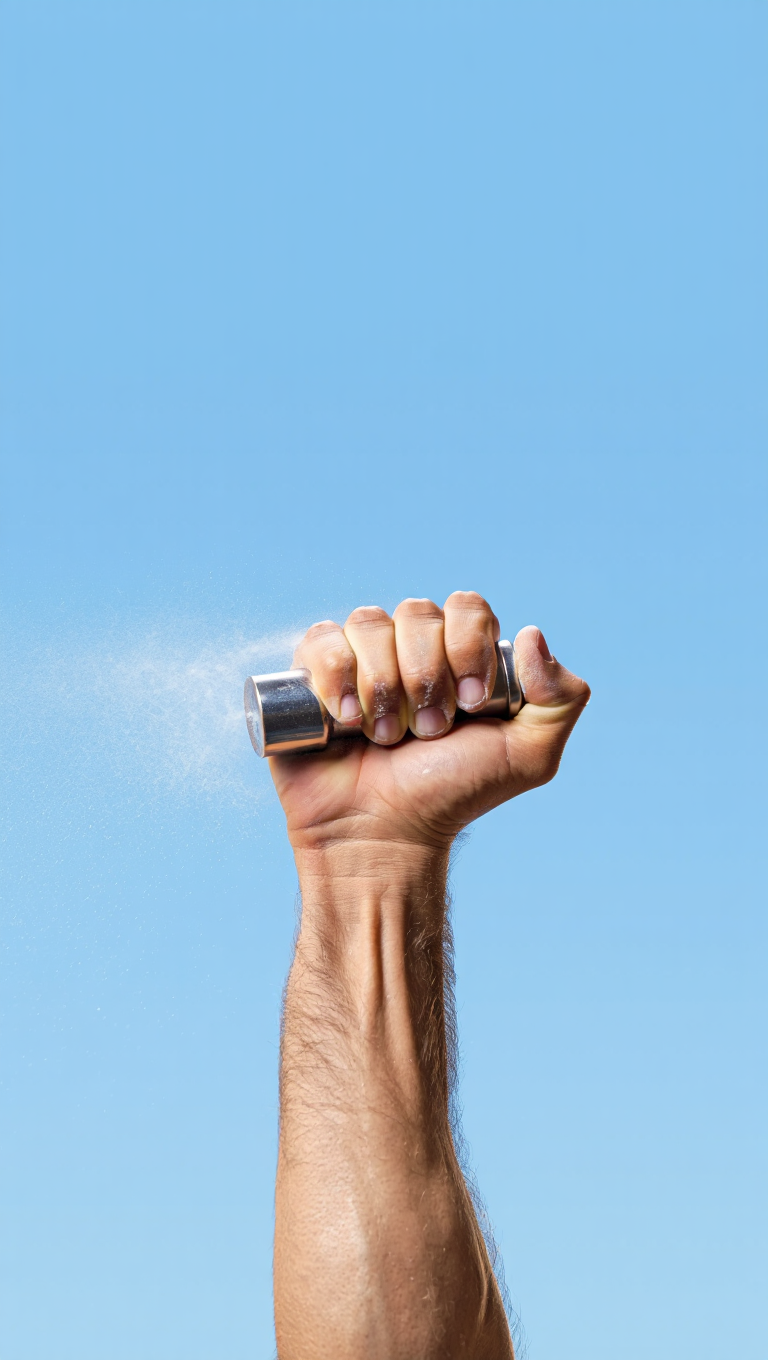
Here's a measurement you can do right now with a piece of equipment that costs less than €20: squeeze a dynamometer as hard as you can. Hold for three seconds. Write down the number.
That number, your grip strength, is one of the most powerful single predictors of how long you'll live and how healthy those years will be. In some of the largest cohort studies ever conducted on human health and mortality, grip strength outperforms blood pressure, BMI, and cholesterol as a predictor of cardiovascular disease, all-cause mortality, and physical disability (see? And? Here too). This isn't a fringe finding from a small academic lab. It's been replicated across dozens of countries and hundreds of thousands of participants.
It's also almost entirely absent from standard medical check-ups.
Why Grip Strength Predicts Mortality
What does the strength of your hand have to do with whether you'll have a heart attack? The association makes much more sense when you understand what grip strength actually measures.
Grip strength isn't just about your hand. It's a proxy for total-body neuromuscular function, specifically, the integrated capacity of your nervous system to recruit motor units and generate force through musculature extending from your forearms through your shoulders. People with high grip strength tend to have greater overall lean muscle mass, better neuromuscular efficiency, higher bone density, and more robust metabolic function.
From this perspective, grip strength is less a cause of longevity and more a biomarker of the physiological resources that determine resilience across multiple systems. There's also a direct mechanistic pathway: skeletal muscle is metabolically active tissue. Higher muscle mass improves insulin sensitivity, lipid metabolism, and inflammatory regulation. The association between muscle quantity/quality and metabolic health is well established, and grip strength correlates reliably with both.
The Evidence: What the Research Shows
The landmark epidemiological evidence comes from the PURE (Prospective Urban Rural Epidemiology) study, one of the largest prospective cohort studies ever conducted, spanning 17 countries and 139,691 participants aged 35-70.
Each 5 kg reduction in grip strength was associated with a 17% higher risk of cardiovascular mortality, a 17% higher risk of death from any cause, and an 11% higher risk of myocardial infarction. Critically, grip strength was a stronger predictor of cardiovascular mortality than systolic blood pressure, a metric that most people have had measured dozens of times and that most clinicians track carefully. This held up after adjusting for age, sex, physical activity level, education, smoking, and a range of other confounders.
Garcia-Hermoso et al. (2018) published a systematic review and meta-analysis pooling data from 16 prospective studies. The findings reinforced the PURE results: higher muscular strength, assessed primarily via handgrip, was consistently associated with lower all-cause mortality.
Beyond mortality, grip strength predicts functional outcomes with equal consistency. Lower grip strength in middle age predicts higher rates of disability, mobility limitation, and loss of independence in older age. UK Biobank data (hundreds of thousands of participants) show that low grip strength in midlife is associated with accelerated cognitive decline, depression, and worse health-related quality of life.
What Counts as "Enough" Grip Strength?
Reference ranges vary by age, sex, and body size, but general thresholds associated with elevated health risk:
Men: Below 26-30 kg (57-66 lbs) is associated with increased risk; above 40 kg (88 lbs) is generally considered robust.
Women: Below 16-18 kg (35-40 lbs) indicates elevated risk; above 25-28 kg (55-62 lbs) is associated with low mortality risk.
Your grip strength relative to body weight (grip/bodyweight ratio) is arguably more meaningful than absolute values. The easiest way to test: use a handheld dynamometer (widely available for €20-40). Measure both hands, take the average of 3 trials, track it over time. The trend matters as much as any single measurement.
How to Improve Grip Strength
The genuinely good news: grip strength is trainable at essentially any age, and the adaptations generalize beyond the hands.
Lifting: The single most effective intervention is heavy lifting that requires grip: deadlifts, rows, pull-ups, farmers carries. These movements load the hand and forearm through large ranges while building total-body muscle mass. If you're doing a well-designed strength program, some grip improvement comes for free.
Dedicated grip work: Thick bar training (using thicker implements or wrapping a towel around a bar) dramatically increases forearm recruitment. Farmers carries: walking with heavy loads for 20-40 meters per set, are among the most functional grip exercises available. Dead hangs (hanging from a pull-up bar for 20-60 seconds) train isometric grip endurance, which correlates well with dynamometer tests used in research.
Frequency and aging: Grip strength declines with age, accelerating notably after 60, and the decline tracks closely with losses in total skeletal muscle mass (sarcopenia). Build grip strength and overall muscle mass in your 30s and 40s to provide a physiological buffer as age-related decline begins. Research on resistance training in older adults is consistently positive, even individuals in their 70s and 80s show meaningful improvements with progressive resistance training. It is never too late to start, but earlier is better.
Frequently asked questions
What is grip strength and why does it matter?
Grip strength is a proxy for total-body neuromuscular function and correlates with lean muscle mass, metabolic health, and mortality risk across multiple large studies.
What grip strength numbers indicate elevated health risk?
For men, below 26-30 kg indicates elevated risk; for women, below 16-18 kg. Your grip-to-bodyweight ratio is arguably more meaningful than absolute values.
How can I improve my grip strength?
Heavy lifting like deadlifts, rows, and pull-ups is most effective. Farmers carries and dead hangs (20-60 seconds) also train grip strength meaningfully.
Is it too late to build grip strength if I'm older?
No. Research shows individuals in their 70s and 80s make meaningful improvements with progressive resistance training, though earlier is better.
How does grip strength relate to cardiovascular health?
Higher muscle mass improves insulin sensitivity, lipid metabolism, and inflammatory regulation. The PURE study found grip strength predicts cardiovascular mortality better than blood pressure.
Put this into practice
umo combines your wearable data with a quick neuromuscular check to build the session that fits your body today.