Cold Water Immersion: What the Evidence Says About Ice Baths and Cold Plunges
Written and reviewed by Scott Mongold, PhD — Co-Founder & CSO (Biomechanics & Neurophysiology, ULB).
Health 5 min readKey takeaways
- Cold water immersion reliably reduces soreness and maintains performance when athletes compete again within 24-48 hours, with modest but consistent effect sizes.
- Post-training cold plunges may blunt muscle growth by attenuating mTORC1 signaling, making them counterproductive during strength or hypertrophy training blocks.
- Cold exposure produces a substantial norepinephrine spike associated with mood, alertness, and energy, though robust evidence for antidepressant effects remains limited.
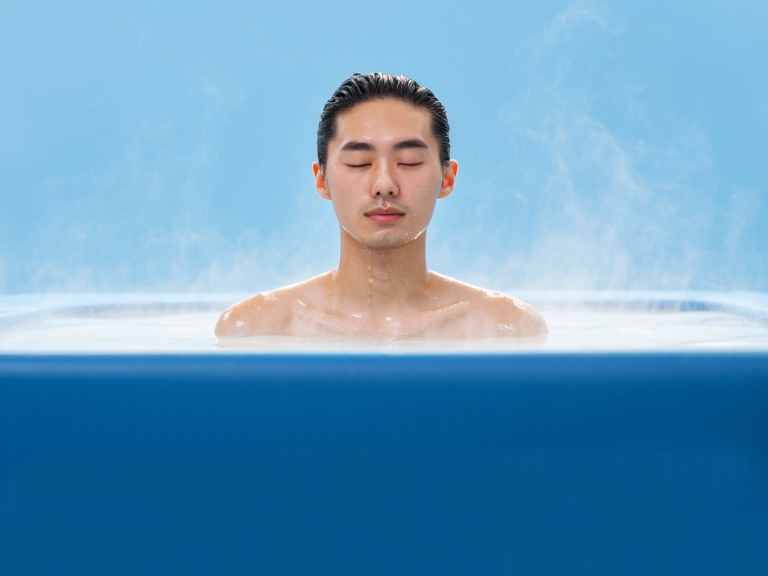
Just about all the wellness influencers have a morning routine built around one. And unlike many wellness trends, cold water immersion (CWI) has a meaningful body of research behind it.
The problem isn't that the hype is entirely wrong. It's that it's selective. The science on cold plunges is more nuanced than "reduces inflammation and speeds recovery" and in some contexts, CWI actively works against your training goals. Understanding when it helps, when it hurts, and when it's mostly irrelevant is what separates evidence-based recovery from expensive theater.
What Happens When You Get in Cold Water
Cold water immersion triggers a coordinated stress response affecting multiple systems simultaneously. The most immediate effect is peripheral vasoconstriction, blood vessels near the skin surface narrow to preserve core body temperature, reducing blood flow to muscles. Core temperature drops (though less than you'd expect, given how aggressively the body defends it), and there's a substantial neuroendocrine response: norepinephrine rises, accounting for the mood-elevating and alertness effects most people report after a cold plunge. There's also a vagal component, cold exposure tends to increase parasympathetic nervous system activity, which is why some researchers associate it with improved HRV.
Recovery Between Competition Bouts
This is where CWI has the strongest evidence. When athletes need to perform again within 24-48 hours, tournament sports, multi-day stage races, back-to-back matches, cold water immersion reliably reduces perceived soreness and helps maintain subsequent performance. A 2015 meta-analysis analyzed 9 studies and found CWI outperformed passive recovery across measures of soreness, perceived fatigue, and functional performance. Effect sizes were modest to moderate, but consistent. The mechanisms likely include reduced inflammatory signaling and the direct analgesic effect of cold.
The Problem With Cold Plunges and Muscle Growth
If your primary goal is building muscle, cold water immersion applied immediately after strength training may be working directly against you.
The inflammatory response to resistance training, the signaling cascade many people reflexively try to suppress, is actually part of the stimulus for muscle protein synthesis. Post-training CWI appears to attenuate mTORC1 signaling, a primary driver of skeletal muscle hypertrophy. A 2015 study by Roberts et al. showed that athletes using cold water immersion regularly after strength sessions gained significantly less muscle mass and strength over 12 weeks compared to those using active recovery. This isn't a single outlier study, the mechanistic story is plausible and directionally consistent.
Practical implication: if you're in a hypertrophy or strength block, save the cold plunge for rest days or wait at least 4-6 hours post-training before getting in.
Mood, Mental Health, and the Norepinephrine Effect
This is arguably the most underappreciated legitimate use case for deliberate cold exposure. The norepinephrine spike is substantial and reproducible, norepinephrine is a neurotransmitter and hormone associated with alertness, attention, mood regulation, and energy. The cold-induced release is dose-dependent: colder water and longer duration produce a larger response.
Some researchers have highlighted the potential antidepressant and mood-regulating effects of cold exposure. The evidence here is less robust than for the recovery applications, most mood data comes from observational studies and small trials rather than large RCTs.
Metabolic Effects
Cold exposure activates brown adipose tissue (BAT), a type of fat that generates heat by burning calories rather than storing them. Repeated cold exposure can increase BAT activity and may improve insulin sensitivity over time. The metabolic effects, however, require more sustained and regular cold exposure than a casual post-workout dip, and the magnitudes are modest in already-lean, active individuals. Cold plunges are not a meaningful fat-loss intervention. If you're doing them for metabolic reasons alone, the return on shivering is thin.
When to Use CWI and When to Skip It
Use CWI if: you're competing or performing again within 24-48 hours and need to minimize soreness; your primary training is endurance or aerobic work (where hypertrophy blunting is less relevant); you're in a deload or recovery week; or you value the mood and mental clarity effects independently.
Skip CWI immediately post-training if: you're in a strength or hypertrophy block with muscle growth as the priority; or you just completed a session specifically designed to create a hypertrophic stimulus.
Practical parameters: most research uses water temperatures of 10-15°C (50-59°F) for 10-15 minutes. Colder isn't linearly better, and hypothermia risk increases below ~8°C for longer durations.
Frequently asked questions
What happens to your body during cold water immersion?
Cold water triggers peripheral vasoconstriction, raises norepinephrine (improving mood and alertness), and increases parasympathetic activity, which may improve HRV.
Do ice baths help muscle recovery after workouts?
For competition within 24-48 hours, yes—CWI reduces soreness and maintains performance. But immediately after strength training, it may blunt muscle growth.
Why shouldn't I take ice baths during a muscle-building phase?
Cold water immersion after resistance training attenuates mTORC1 signaling, a key driver of muscle protein synthesis, potentially reducing strength and mass gains.
How cold and how long should a cold plunge be?
Most research uses 10-15°C (50-59°F) for 10-15 minutes. Colder isn't necessarily better, and hypothermia risk increases below ~8°C for longer durations.
Can cold plunges help with fat loss or metabolism?
Cold exposure activates brown adipose tissue and may improve insulin sensitivity, but the metabolic effects are modest and require sustained regular use—not a meaningful fat-loss tool.
Put this into practice
umo combines your wearable data with a quick neuromuscular check to build the session that fits your body today.